
Window Condensation and Frost in Winter: Why Grand Rapids, MI Windows Sweat and What to Do
On a cold January morning in Grand Rapids, Michigan, plenty of homeowners find water beading on the glass, ice in the bottom corners or a cloudy haze they cannot wipe off. Some of that is normal winter physics. Some of it is a sign the window, or the air in the house, needs attention. The trick is telling which is which, because the fixes are very different and only some of them involve buying anything.
Why condensation is so common in Grand Rapids winters
Condensation forms when warm, moist indoor air touches a surface colder than its dew point. West Michigan winters supply plenty of cold surfaces. NOAA's 1991–2020 normals for Gerald R. Ford International Airport show a January average high of 31.0°F and low of 18.6°F, about 133 nights a year at or below freezing and roughly 6,408 heating degree days. Kent County sits in IECC Climate Zone 5A.
The air is not dry either. Lake Michigan brings cloudy, moist weather and lake-effect snow; the National Weather Service notes that on west-southwest winds Kent is the only inland county that sees notable heavier lake-effect snow. Add the age of local housing (Grand Rapids' median home was built in 1953, and 37.5% of homes predate 1940) and you get a lot of older, colder window glass meeting humid indoor air.
Three kinds of window condensation
| Where you see it | What it usually means | What to do |
|---|---|---|
| On the inside surface of the glass | Indoor humidity is high for how cold the glass is | Lower humidity, improve air movement, then judge the window |
| Between the panes of double- or triple-pane glass | The insulated glass seal has failed | Replace the glass unit or the window; wiping will not help |
| On the outside surface | The outer pane is cold because the glass insulates well | Usually nothing; it burns off as the morning warms |
Condensation on the inside of the glass
This is the most common type and the one you have the most control over. Moisture comes from everyday living: showers, cooking, drying laundry indoors, houseplants, aquariums, people breathing and humidifiers. The coldest parts of a window collect it first, which is why you see it along the bottom edge of the glass, in corners, and on single-pane glass or old aluminum frames.
Things that make it worse:
- Heavy curtains or closed blinds trapping air against the glass overnight
- Furniture blocking heat registers under windows
- A humidifier set high during a cold snap
- Bathroom and kitchen fans that are missing, weak or not used
- A tighter house after new insulation or siding, with no extra ventilation
Some inside condensation on the coldest mornings is normal, even with good windows. Water that runs onto the sill every day, or that shows up on every window in the house, is a humidity problem to fix before it becomes a rot or mold problem.
Frost and ice on the inside of windows
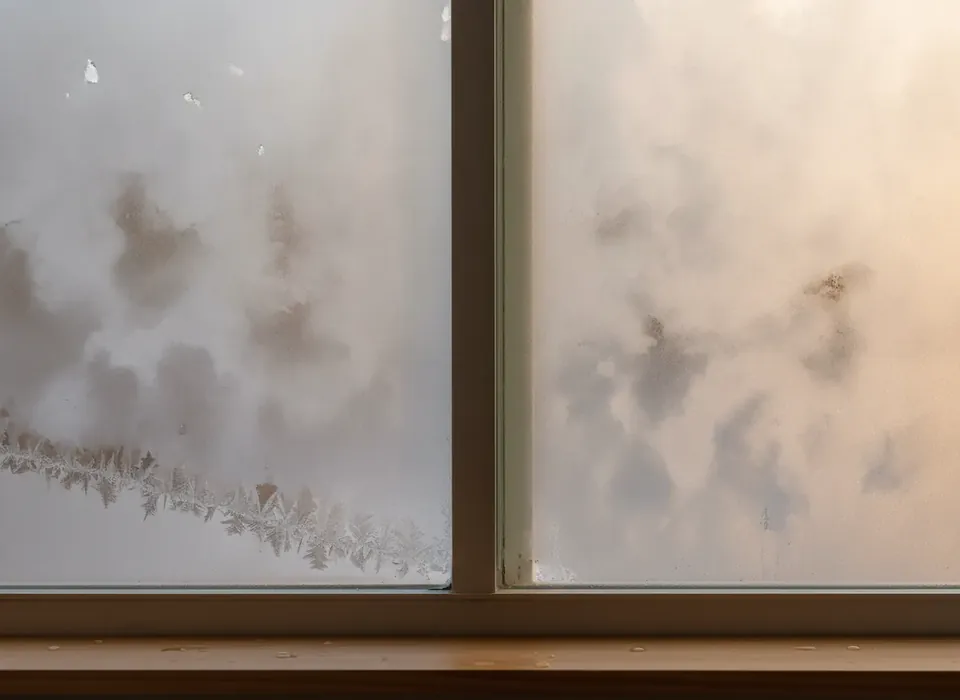
When the inside surface drops below freezing, the moisture turns to frost instead of water. In Grand Rapids that usually means single-pane glass, a gap in an old storm window, an aluminum frame or a sash that no longer seals. Ice that builds up along the bottom rail of an old wood window and melts onto the sill every afternoon is hard on paint and wood over time.
If the home was built before 1978, be careful with scraping or sanding peeling sills and sashes: the paint may contain lead. If your home was built before 1978, federal law requires the installer to be an EPA Lead-Safe Certified Firm for window work that disturbs paint, and EPA runs that program in Michigan.
Fog between the panes means a failed seal
Double- and triple-pane windows are sealed units. When that seal fails, moist air gets into the space between the panes and you see fogging, streaks or a white film that cannot be cleaned from either side. The glass loses some of its insulating value, and the haze usually gets worse over time. Lowering your humidity will not fix it.
The fix is to replace the sealed glass unit or the whole window. Fixr's August 2025 figures put a new double-pane insulated glass unit at $150–$600 and glass replacement at $300–$880. Typical published ranges, not quotes; Grand Rapids installers' quotes vary. If the frame and sash are sound, replacing just the glass is often worth pricing; the window replacement cost guide shows what a full replacement runs for comparison. Our page on window repair and foggy glass covers when that works and when it does not.
What you can do this winter
- Run the fans. Use bathroom fans during and after showers and the kitchen hood while cooking.
- Check your humidifier. If windows are streaming, turn it down, especially on the coldest nights.
- Let air reach the glass. Open blinds and curtains during the day and keep registers clear.
- Vent the dryer outdoors and avoid drying lots of laundry inside.
- Wipe sills daily during cold snaps so water does not sit on wood or drywall.
- Use storm windows on old wood windows. A tight storm window keeps the inner sash warmer. In Grand Rapids local historic districts, wood or aluminum storms are encouraged and handled at staff level; see historic window repair and storm windows.
- Weatherstrip loose sashes so cold air is not washing over the glass.
Before you replace windows over condensation, fix the humidity first. New windows with a warmer inside glass surface usually sweat less, but no window can keep up with a house that is far too humid. If every window in the house fogs up, start with ventilation. If one or two windows fog between the panes, that is the glass.
When condensation means it is time for new windows
Replacement starts to make sense when you see several of these together:
- Fog between the panes on several windows, especially units 15 or more years old
- Soft, dark or rotted wood at sills and the bottom of sashes
- Single-pane glass with no storms, or storms that are beyond repair
- Frost on the inside on most cold mornings, even with humidity under control
- Frames that let in drafts you can feel
If you are weighing old wood windows, read repair or replace old wood windows first. If you are pricing new units, a good glass package matters more than any brand name. Kent County is almost certainly in ENERGY STAR's Northern zone, where qualifying windows need a U-factor of 0.22 or lower; check the label. Our pages on energy-efficient windows and triple pane vs double pane windows explain the trade-offs.
When you are ready, the free quote form lets you describe the problem once (frost, fogging, rotted sills) and independent local window companies can reply with quotes. We are a free matching service, not a window company, and there is no obligation.
Questions people ask
Why do my windows sweat on the inside in winter?
Warm, moist indoor air condenses when it touches glass colder than its dew point. In Grand Rapids winters, with January lows averaging 18.6°F, inside glass gets cold, especially single-pane or older windows. Lower indoor humidity, run bath and kitchen fans, and let room air reach the glass. Some sweating on the coldest mornings is normal.
Is condensation between window panes fixable?
Not by cleaning. Fog between the panes means the sealed glass unit has failed. You can replace just the insulated glass unit, which Fixr's August 2025 figures put at $150 to $600 for double-pane, or replace the whole window if the frame or sash is also worn. Have an installer check the frame first.
Is condensation on the outside of windows a problem?
Usually not. Dew on the outside of the glass on a cool morning means the outer pane is staying cold because the window insulates well. It typically clears as the sun warms the glass. It is a different situation from fog between the panes, which signals a failed seal.
Why is there ice on the inside of my windows?
Ice forms when the inside glass or frame drops below freezing, which usually means single-pane glass, a leaky or missing storm window, an aluminum frame or a sash that no longer seals. Lower humidity helps, but persistent inside ice is often a sign the window needs repair, a storm window or replacement.