
Historic Window Repair & Storm Windows in Grand Rapids, MI
Nearly four in ten Grand Rapids, Michigan homes predate 1940, and many still have original wood sash. In Heritage Hill and the other local historic districts, the city's rules shape every option. Here's how repair-first, the free window assessment, the Certificate of Appropriateness and storm windows work.
Get a Free Quote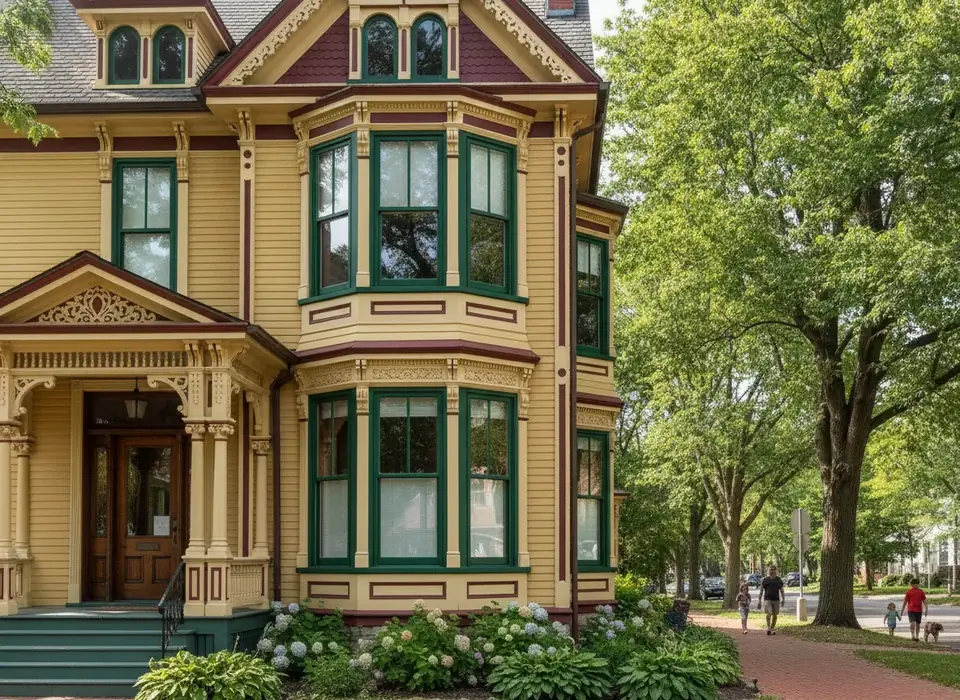
Who this page is for
Grand Rapids' median home was built in 1953, and 37.5% of the city's homes predate 1940. Heritage Hill, designated in 1973, is the city's oldest local historic district. Old-growth wood sash in houses like these can often be repaired for decades.
This page is for owners of pre-war houses, especially inside a local historic district, where exterior window work needs city approval first. Grand Rapids Window Pros is a free matching service, not a window company. Independent local companies that do sash repair, storm windows and in-kind replacement reply with quotes; approvals are between you and the city.
Which Grand Rapids properties need a Certificate of Appropriateness
Grand Rapids' local historic districts include Heritage Hill, Heartside, Cherry Hill, Wealthy Street and Fairmount Square, plus individually designated landmarks. Under the Historic Preservation Commission's April 2026 guidelines, every property in a district or landmark needs a Certificate of Appropriateness (CoA) for exterior alterations and repairs, contributing or not. That includes windows.
Starting work without approval violates City Code Chapter 68 and can bring a stop-work order, restoration and fines. No installer can get around the review; be wary of anyone who suggests it. Holland has its own Historic District Commission and window guideline, so Holland owners should call the city before collecting quotes.
Repair first: what the city's guidelines say
The guidelines are direct. Replacement of a contributing window "will only be considered if repair is not feasible," and "glazing, re-roping, fit, glass, paint and efficiency are not cause for replacement." In practice, a sash that rattles, sticks, has broken cords, loose putty or a cracked pane is a repair job.
| Problem | Typical repair | Replacement justified? |
|---|---|---|
| Broken sash cords, sash won't stay up | Re-rope or re-chain; rebalance weights | No |
| Loose or missing glazing putty | Reglaze; prime and paint | No |
| Cracked single pane | Replace the glass to match | No |
| Drafts, rattling | Weatherstrip, adjust stops, add a storm window | No |
| Rot in part of a sill or sash | Epoxy consolidation or a wood dutchman patch | Usually no |
| Sash or frame rotted or missing beyond repair | Documented by the assessment | Possibly, in kind |
The city also states that a weather-sealed historic window with a storm window "is just as energy efficient, if not more so, than a new insulated window." That's the city's position, not a guarantee, but it explains why repair plus a storm is the default path here.
Step by step: assessment, application, review
Free city window assessment
Grand Rapids historic preservation staff offer free window assessments. Staff look at each window and note which are repairable. Repairable windows must be repaired.
Apply for a CoA
Submit photos of each window, the assessment results, and the repair plan or the product specifications for any proposed replacement or storm window.
Staff or commission review
Minor work such as in-kind repairs and storm windows goes to staff, typically within one to two days. Other requests go to the full Historic Preservation Commission, which meets monthly, so plan on two to four weeks.
Hire and start work
Only after the CoA is issued. A CoA is valid for 12 months.
| Review | Fee (FY27) | Typical timing |
|---|---|---|
| Staff-level CoA (in-kind repair, storm windows) | $27 | About 1–2 days |
| Full Historic Preservation Commission review | $92 | About 2–4 weeks |
Historic preservation staff can be reached at 616-456-3451, and the city's planning line is 616-456-4100.
When replacement is approved: in-kind rules
If a window really is beyond repair, the replacement must match the existing window "in all facets," including design, dimensions, pane configuration, muntins, glass, finish, location, operation and materials. A few specifics from the guidelines:
- Snap-on muntins, interior-only muntins and grilles that are only spacers between the glass are not permitted. Simulated divided lites need muntins outside and inside with a spacer bar between the glass.
- Glass with less than 70% visible light transmittance, tinted glass and window films are not permitted.
- Leaded, stained and prismatic glass may not be removed.
- The guidelines describe vinyl as having little to no profile depth. Substitute materials are considered by the commission only when in-kind is not technically or economically feasible, and on secondary facades. Never plan on vinyl being approved.
- Serviceable contributing windows may not be swapped out for new ones simply by choice.
For material comparisons, see fiberglass, wood and composite windows. For a deeper walk-through of the rules, read historic district window rules in Grand Rapids.
Storm windows: the fast-track option
The city's guidelines say wood or aluminum storm windows are "highly encouraged" and that review is handled by staff. To fit the guidelines, a storm window should:
- be inset within the window opening against the blind stops, not surface-mounted over the trim;
- match the color of the window trim or sash;
- match the window style, so a double-hung gets a two-part storm with its meeting rail lined up with the sash meeting rail.
Exterior storms protect the old sash from weather and add an insulating air space, and the original sash stays.
Lead-safe work on old windows
Old sash, sills and trim often carry lead paint, and window work makes dust. If your home was built before 1978, federal law requires the installer to be an EPA Lead-Safe Certified Firm (EPA runs this program in Michigan). That applies to repair as well as replacement once painted surfaces are disturbed beyond EPA's small minor-repair threshold. Ask to see the firm's certificate and how they contain dust. Owners of pre-1978 Grand Rapids rentals should also know the city's Chapter 12 rental lead-paint rules.
What historic window work costs
Repair pricing depends on each sash's condition, so ask for per-window line items.
| Item | Typical range | Source |
|---|---|---|
| Historic district review (CoA) | $27 staff review / $92 full commission | City of Grand Rapids HPC, 2026 |
| Wood window (unit), for in-kind replacement | $600–$2,000 | Fixr, Jan 2026 |
| Installation labor | $150–$300 per standard window | Fixr, Jan 2026 |
| Glass replacement (single pane or unit) | $300–$880 | Fixr, Aug 2025 |
See the Grand Rapids window replacement cost guide for whole-house planning figures, and repair or replace old wood windows for the trade-offs outside the districts.
Outside the districts: East Grand Rapids and other pre-war homes
We found no local historic-district window rules in East Grand Rapids or the other suburbs we serve; confirm with your city. Even without review, sound old-growth sash plus a good storm often costs less than replacement and keeps the house's character. That covers a lot of East Grand Rapids, where 92.6% of homes were built before 1980. See window replacement in East Grand Rapids.
Questions to ask a historic window company
- Do you repair sash (re-roping, reglazing, epoxy and dutchman repairs), or do you only replace?
- Have you worked on houses under Grand Rapids or Holland historic-district review, and will you supply photos and product specs for my CoA application?
- Will you wait for the CoA before starting any work?
- Are you an EPA Lead-Safe Certified Firm, and how do you contain dust?
- What is your Michigan residential builder or maintenance & alteration license number?
In Michigan, a contractor replacing windows on your home generally needs a state residential builder or maintenance & alteration license (jobs of $600 or more). Ask for the license number and check it on LARA's license lookup (or call 517-241-9316). If you sign a contract at home, Michigan law lets you cancel until midnight of the third business day (MCL 445.112).
Historic Window FAQ
Can I replace the windows in my Heritage Hill house?
Only with a Certificate of Appropriateness, and only for windows that can't be repaired. Grand Rapids' guidelines put repair first, offer a free staff window assessment, and require any replacement to match the original in material, design and dimensions. Book the assessment before you collect replacement quotes.
Are vinyl windows allowed in Grand Rapids historic districts?
Don't plan on it. The city's guidelines describe vinyl as having little to no profile depth and call for in-kind replacement. Substitute materials are considered by the commission only in limited cases, such as secondary facades or where in-kind is not feasible. No installer can promise approval.
How much does a Certificate of Appropriateness cost in Grand Rapids?
Under the FY27 fee schedule, a staff-level review costs $27 and a full Historic Preservation Commission review costs $92. Staff reviews, such as in-kind repairs and storm windows, typically take one to two days; commission reviews take about two to four weeks because the commission meets monthly.
Do storm windows need approval in a historic district?
Yes, but it's a quick staff-level review. The city highly encourages wood or aluminum storm windows that are inset to the stops, color-matched to the trim or sash, and styled to match the window, with meeting rails aligned on double-hungs. Apply before installing.
Get quotes for historic window repair or storm windows
Tell us the neighborhood, how many windows, and whether you've had the city window assessment yet. Independent local companies reply with no-obligation quotes.
Drafty, frosty or foggy windows? Get free quotes.
Describe your windows once and independent Grand Rapids-area installers can reply with no-obligation quotes.